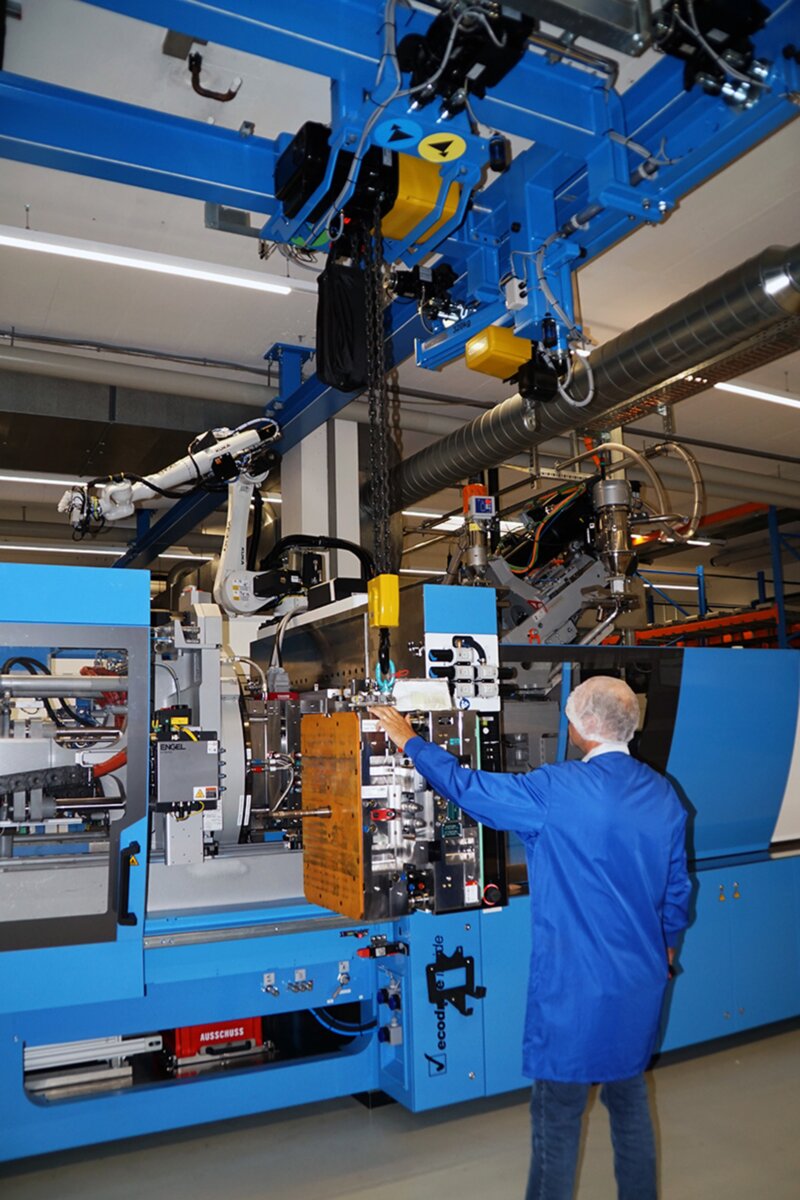
Safety-related crane systems
- Crane system with redundant monitoring and control concept
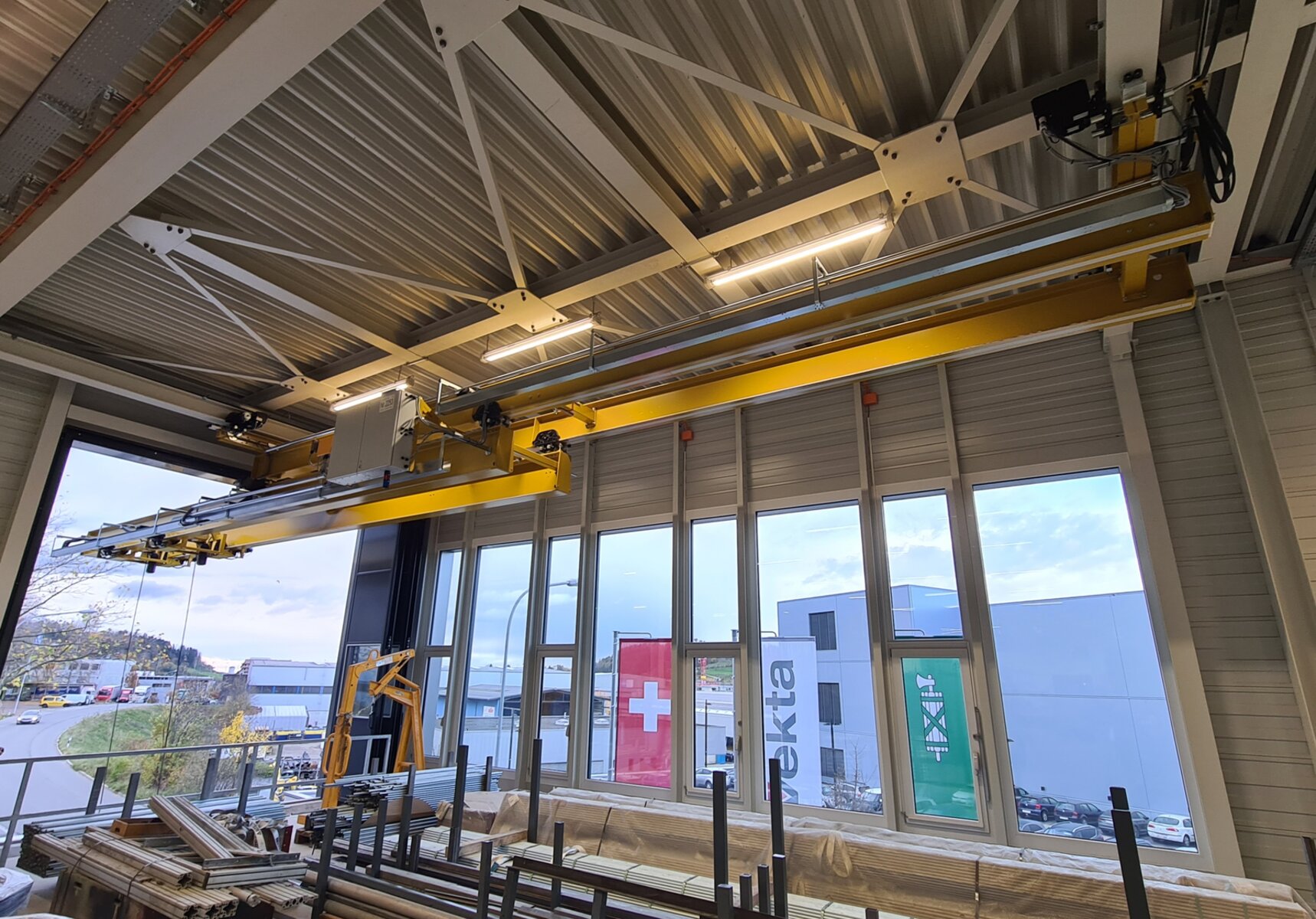
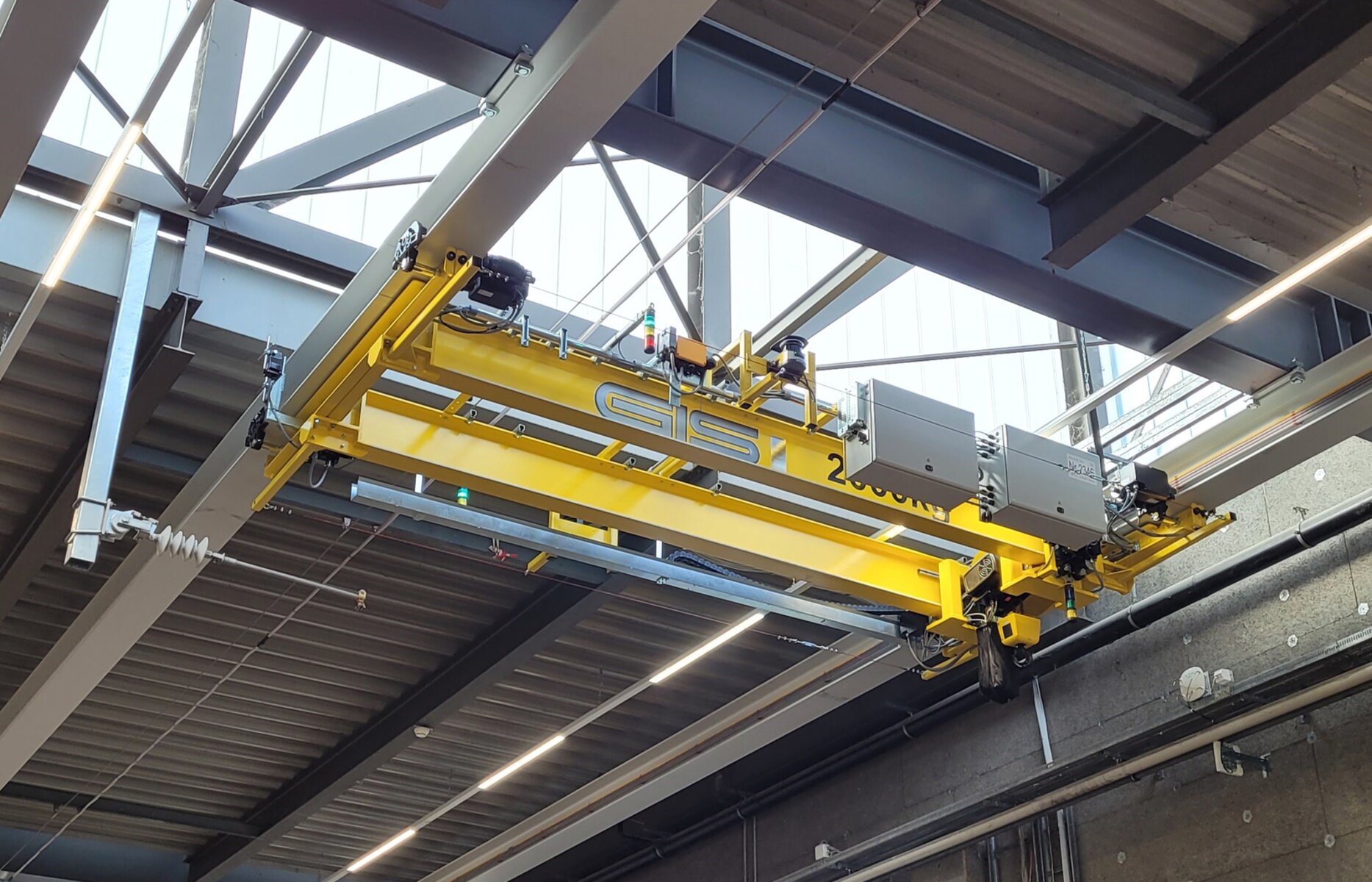
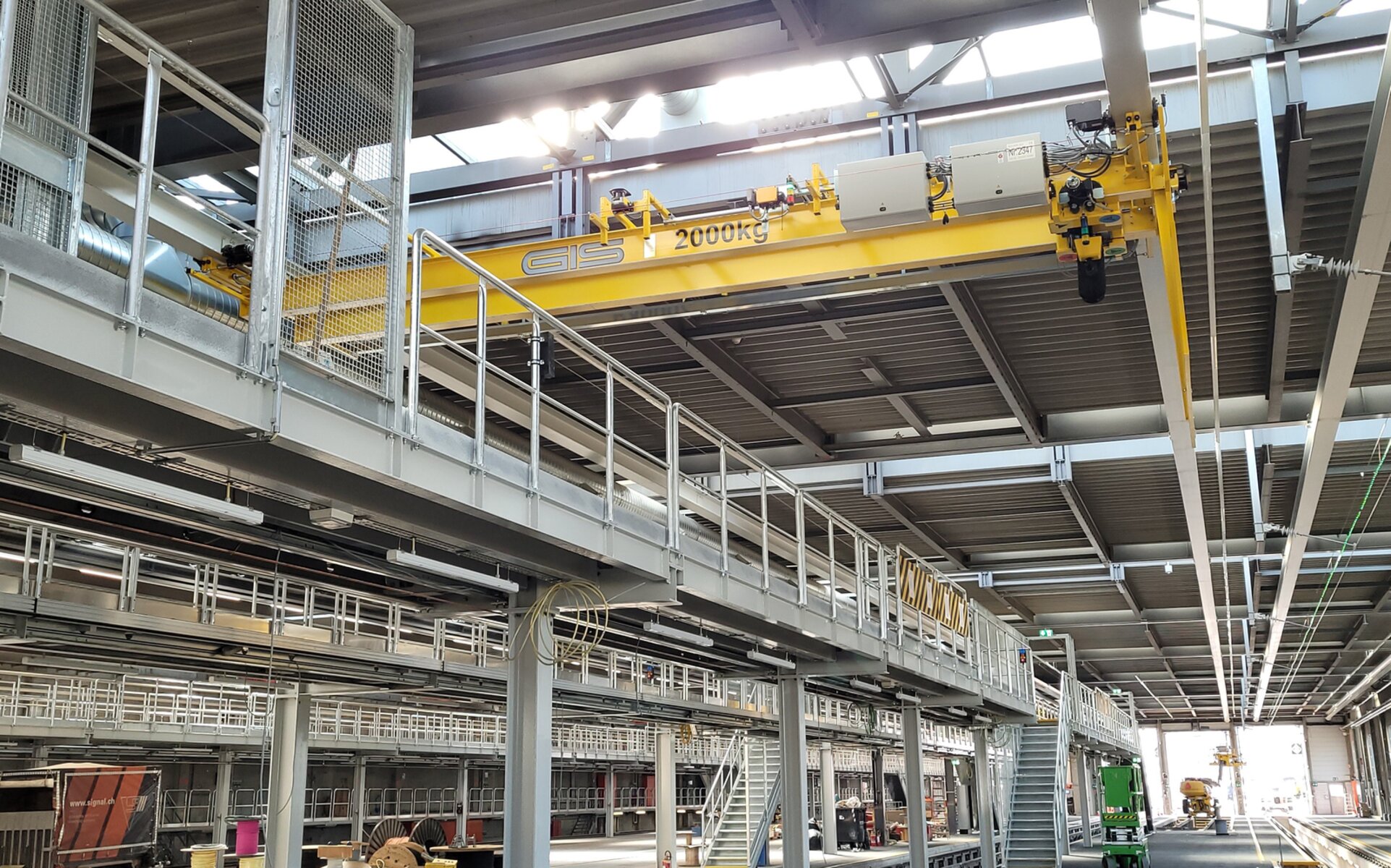
- Crane bridge equipped with laser scanner and light barriers
- Maximum safety for people and infrastructure thanks to collision protection
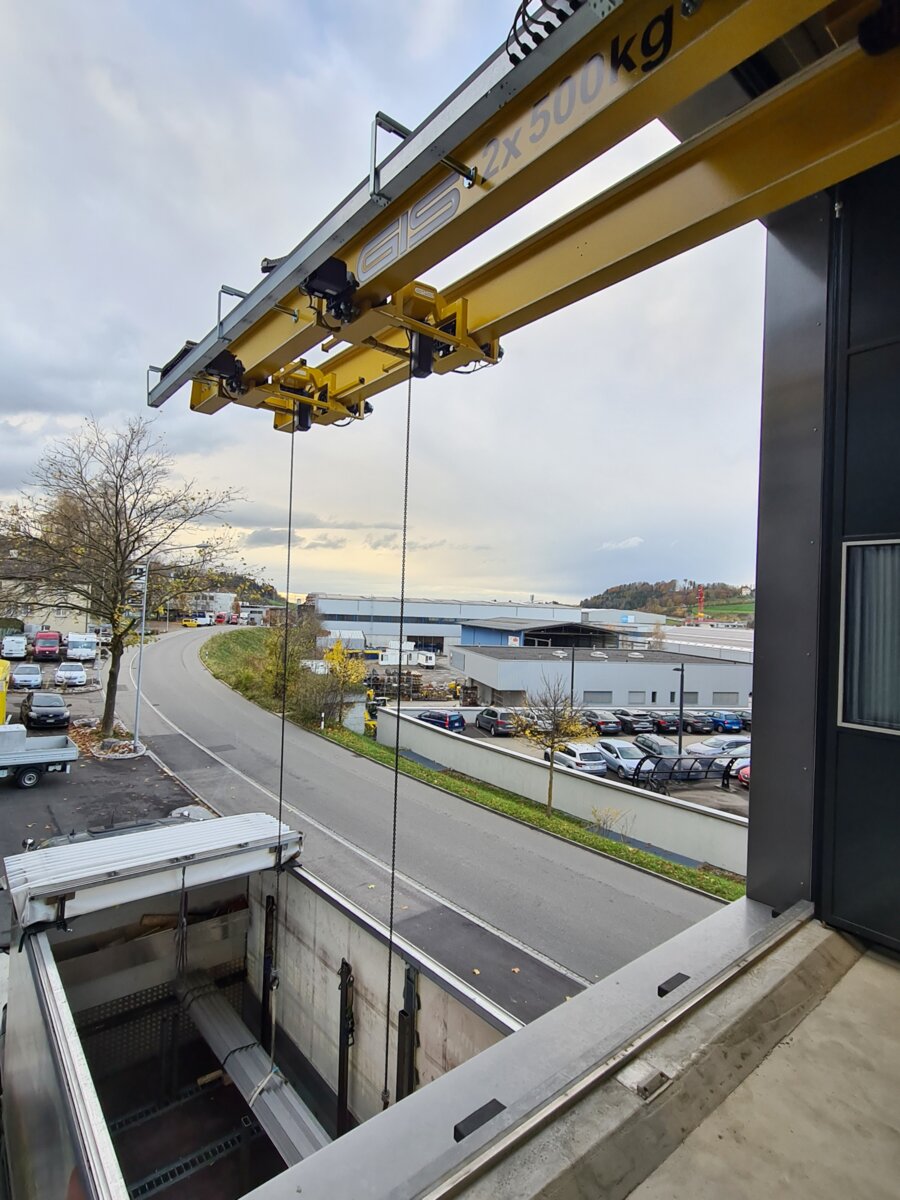
- Tandem travel with several crane bridges for long, bulky loads
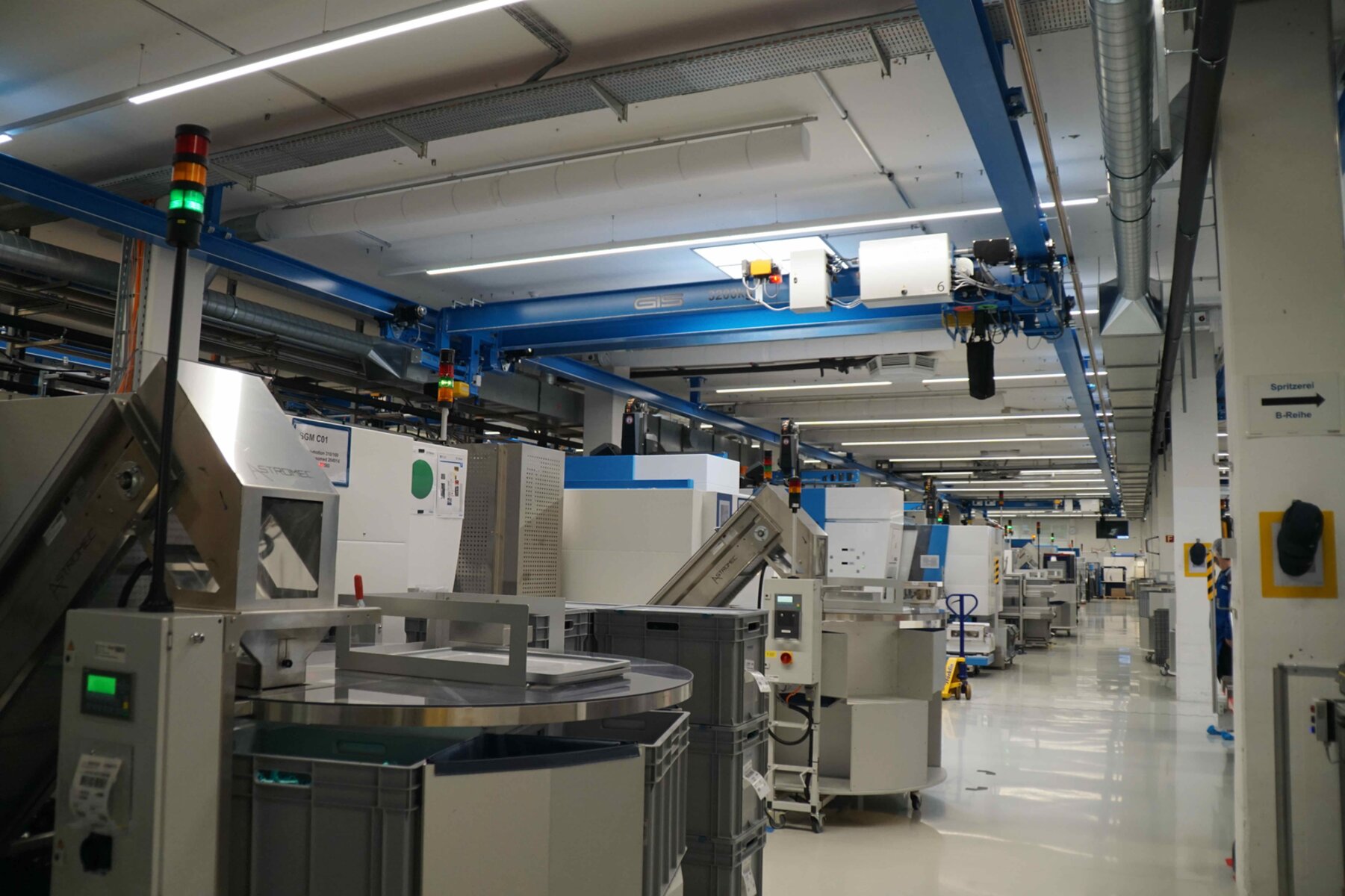
- Optimum adaptation to space limitations thanks to bypass control and load monitoring
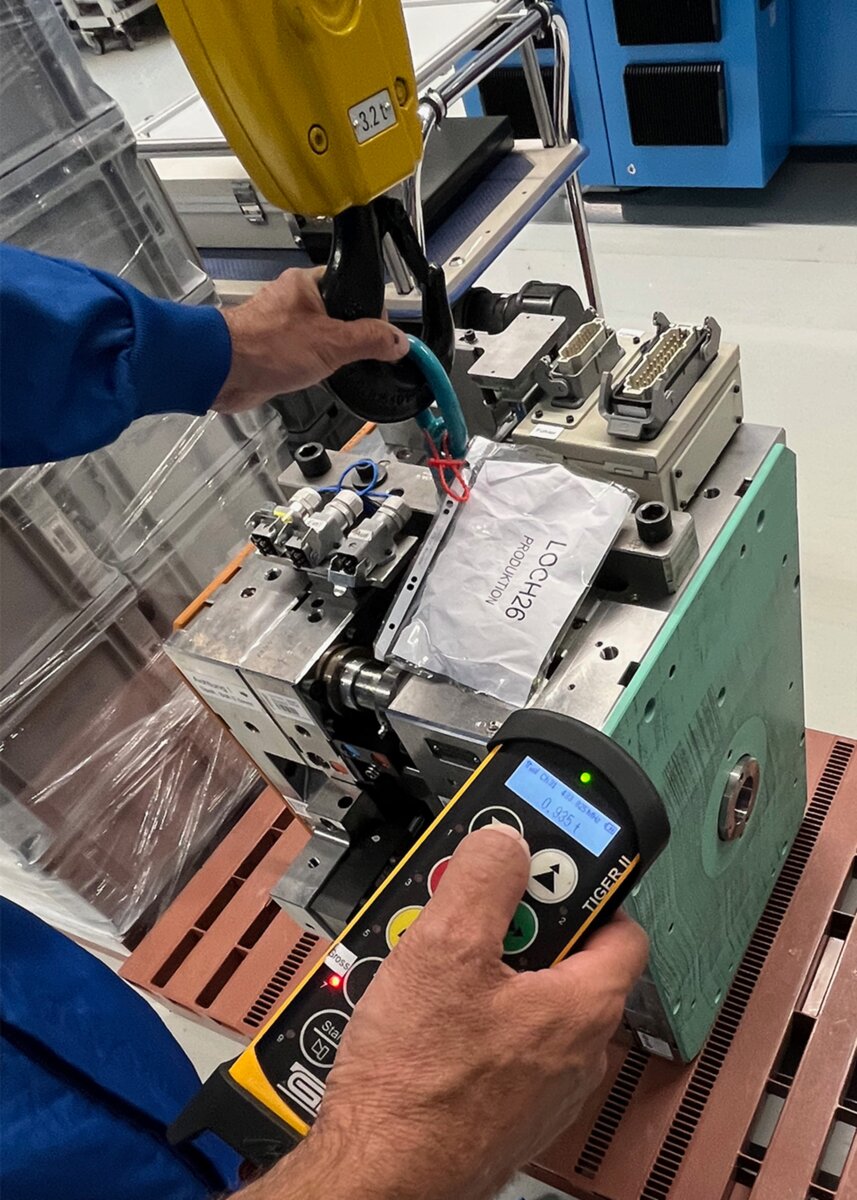
- More efficient work processes thanks to load-dependent lifting speeds
Documentation
Technical specifications
Safety-related crane systems are planned and realised individually according to customer-specific requirements.
Customer's benefit
A safety-linked crane system from GIS is equipped with a redundant monitoring and control concept which, in the event of a possible irregularity, causes the crane system to reduce the travelling/lifting speed independently and in a controlled manner until it comes to a standstill. Dangerous situations for the crane operator, the transported goods and the surrounding infrastructure are recognised in advance and prevented so that the operator can concentrate on his work at all times. The crane system can be customised for a wide variety of tasks:
Height collision protection (SIL3)
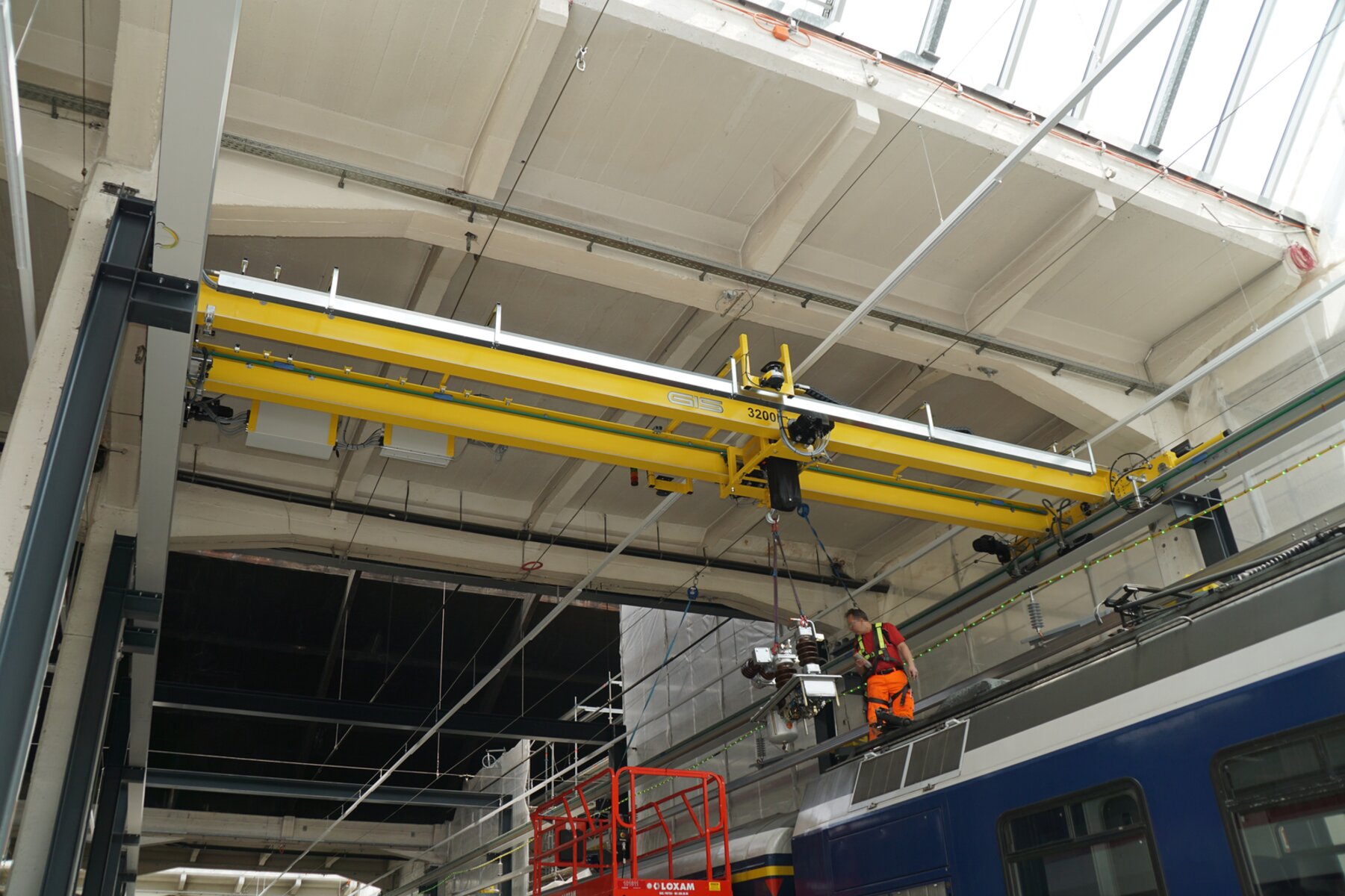
The crane bridge is equipped with laser scanners in both longitudinal directions of travel, which initiate an automatic stop in the event of an imminent collision with an object. The system also recognises ropes and belts of height safety devices (PPE) in the horizontal travel axis (x, y) from full travel speed, which are in danger of colliding with the crane. The crane travelling speed is reduced until a predefined approach zone is reached, right down to a standstill. This safety precaution also includes a walk-under protection for persons working on fall arresters. By acknowledging by the crane operator, it is possible to continue the crane travel at a reduced speed so that the work process (e.g. disassembly of components on the bus roof) is not impeded.
Bypass control
The safety-linked crane system enables the crane to drive around static areas in which it should not travel at all or only at a reduced speed. Sensor monitoring prevents the crane from unintentionally driving over these zones, forcing a controlled stop and thus minimising the risk of collisions. After a conscious acknowledgement by the operator, the crane can safely drive through the danger zone.
Tandem travel and collision protection for multiple crane bridges
Synchronising and communicating monitoring mechanisms are required for parallel travel and lifting movements. An interruption in the operation of one lifting unit must have a defined effect on the other lifting unit. Slipping clutch monitoring is used to detect one-sided slippage of the lifting unit, whereupon the connected units automatically switch to a safe state. This enables tandem lifting and travelling with several crane girders and ensures the safe transport and precise positioning of long and bulky loads. With several crane bridges on one crane runway, monitored crane distancing can protect against overloading of the crane runways and collisions.
Load-dependent lifting speed
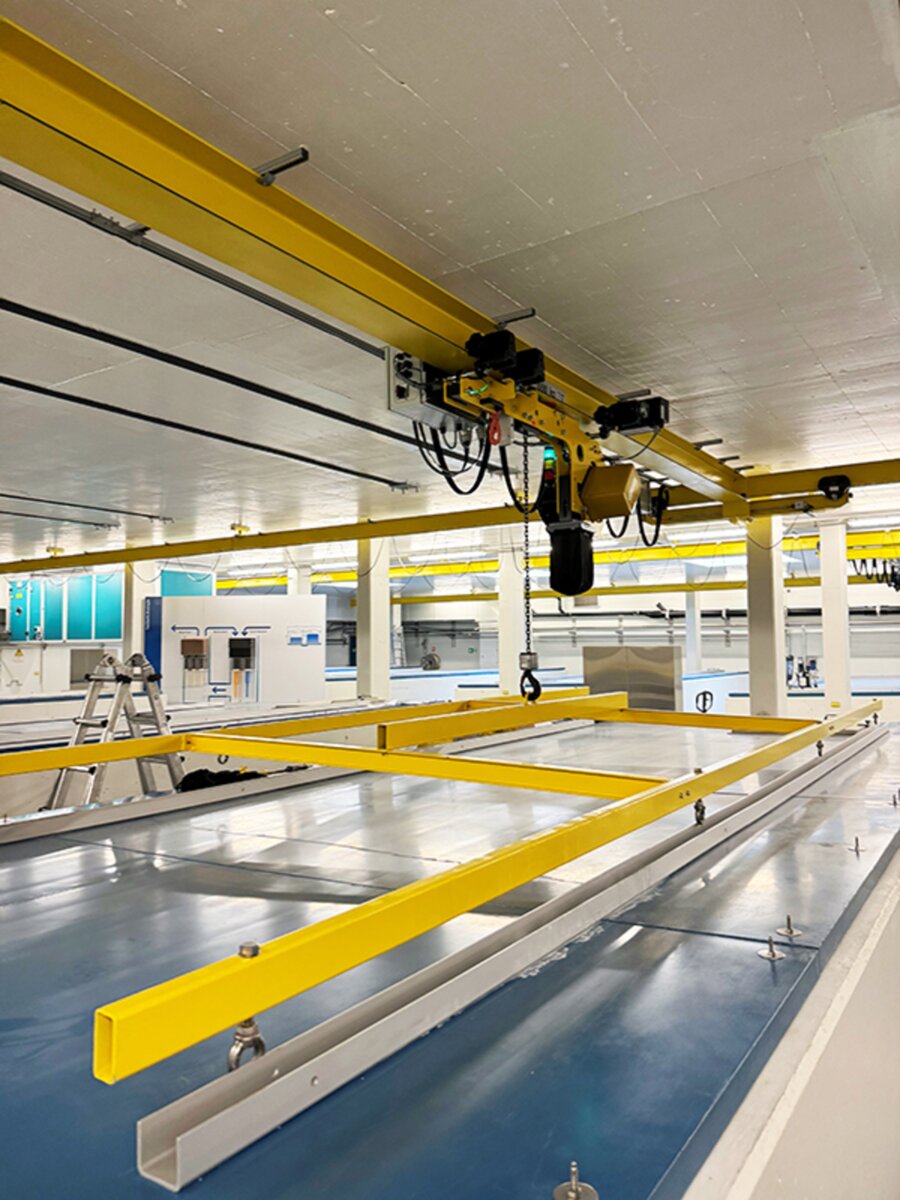
GIS electric chain hoists equipped with load cells and frequency inverters make a decisive contribution to optimising work processes, increasing work safety and extending the life cycles of hoists.
Instead of two fixed hoist speeds, the speed is adjusted according to the load on the hook and brought into the optimum frequency range. Variable lifting speeds from 0.3 to 10 m/min thus increase the working speed in high production halls, prevent excessively fast movements with heavy loads and protect the gearbox and motor.
Lift height monitoring and position-dependent lift height reduction
As with the bypass control, static partial ranges can be defined by using incremental and/or absolute encoders, which limit the lifting height. Group movements in the vertical Z-axis can be executed in a controlled manner and synchronised within the specified parameters by the safety control system. This means that even simpler applications, such as automated big bag tightening, can be realised.
Accessories & options
Retrofitting safety systems to existing crane systems
Gallery